B2B link building is the work of earning links from other websites to yours, specifically from the trade publications, partners, associations and industry sites your buyers already read and trust. In B2B, a handful of relevant links beats hundreds of random ones, because the audience is small, several people sit in every buying decision and the sales cycle is long.
This guide covers the basics, 10 strategies that work, how to choose between them, how to run outreach and what Google treats as spam. It reflects how our B2B SEO agency plans link work: start with what you already have, pick a few methods and measure the effect on revenue.
What is B2B link building?
B2B link building is earning links from other sites to yours, with the goal of reaching buyers and building authority in your market. Google finds new content by following links (“Other pages are discovered when Google extracts a link from a known page to a new page”, as Google’s guide to how Search works puts it), and they also work as one signal of trust. That makes link building part of off-page SEO, work that happens outside your own site.
In B2B the aim is relevance, not raw volume. A link from an industry association that your buyers actually visit is worth more than ten from unrelated blogs.
Most backlinks fall into a few types:
- Editorial links: another site links to you because your content is useful to its readers.
- Contributed content links: you write an article for a publication and the author bio or body links back.
- Partner and directory listings: technology partners, integration marketplaces, trade associations and supplier lists.
- Converted mentions: someone mentions your brand without a link, and you ask for one.
- Paid or sponsored links: legitimate only when they are marked as such (more on that below).
These are all inbound links, also called backlinks: links on other sites that point to yours.
Why B2B is different: small audiences and long buying cycles
B2B link building differs from consumer link building because the audience is smaller, the buying group is larger and the research phase is long. Fewer people search for your topics, but each visit is worth more, so a small number of the right referring domains can matter more than a big pile of off-topic ones.
Buyers also do a lot of reading before they talk to you. 6sense’s 2025 Buyer Experience Report put the average B2B buying cycle at 10.1 months, and buyers first contacted sellers about 61% of the way through the process (CustomerThink’s summary of the 6sense report). In practice that means buyers form opinions from third-party sources long before a sales call. Where you are mentioned and linked matters at that stage.
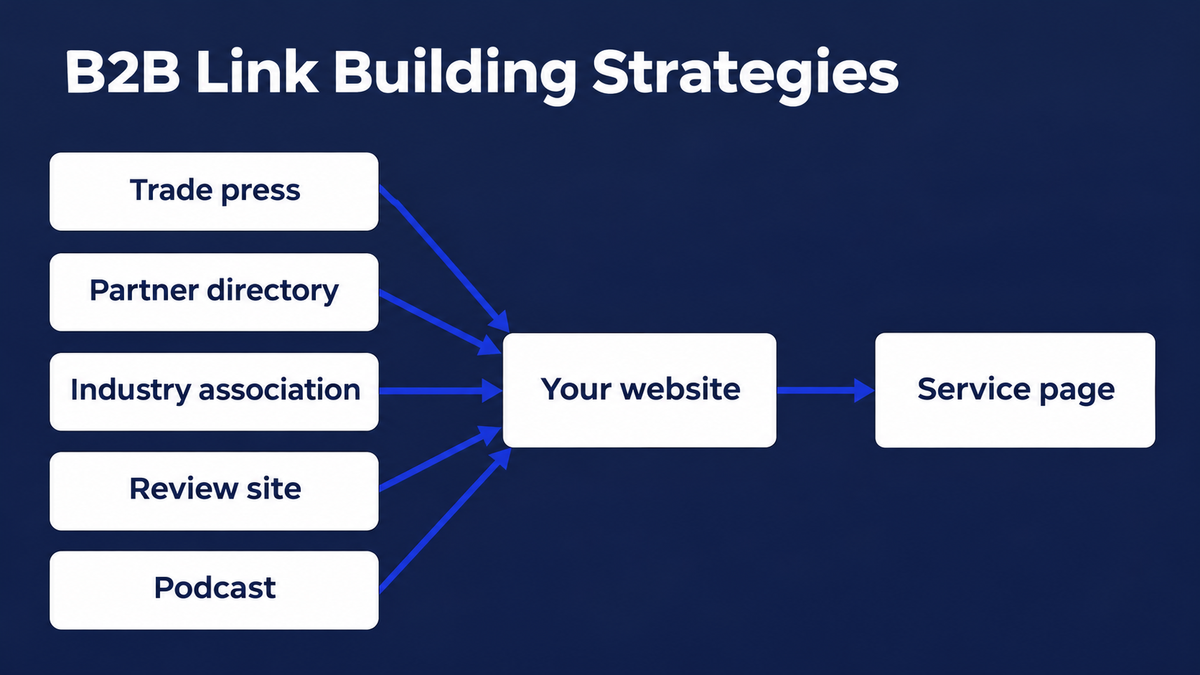
Your link sources look different too. Think trade press, associations, partner directories, review sites and niche newsletters, not lifestyle blogs. If you already invest in search engine optimization, link work is the part that builds credibility beyond your own site. It also sits next to your content marketing: every report, guide and case study you publish is a candidate for outside citations.
Basics before you start: target pages and good backlinks
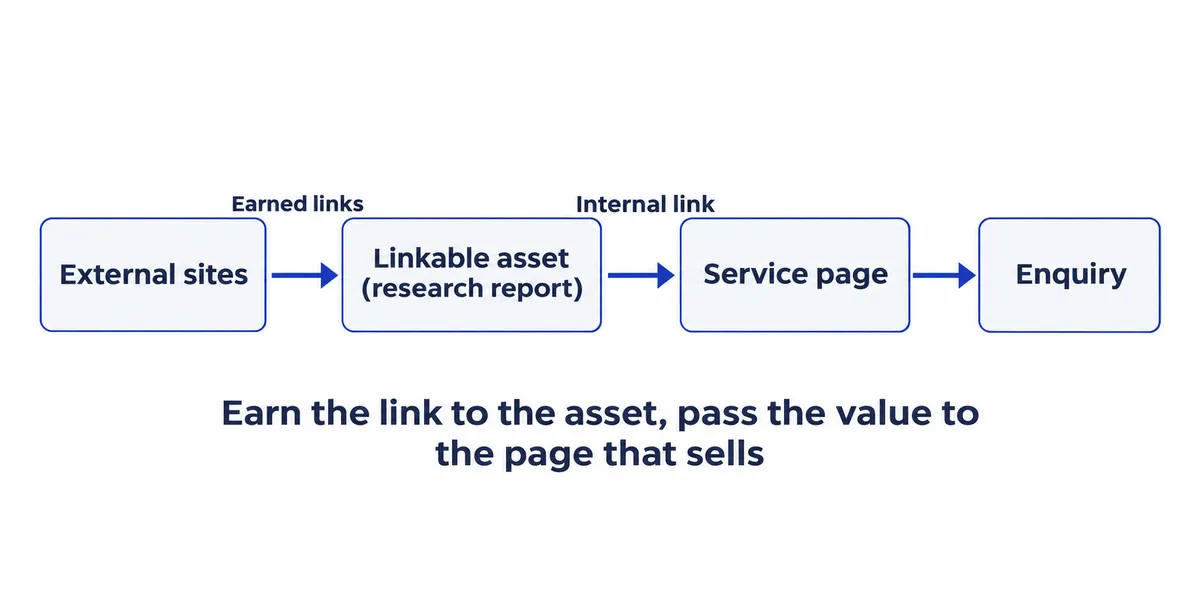
Before you contact anyone, decide where the links should send value. Linkable assets such as research, guides and free calculators earn links easily. Sales copy for products and offers rarely does, because few editors want to send readers to a pitch. So earn the link to the asset, then pass value to the page that sells with internal links.
Here is an example in words. A logistics firm publishes a freight cost benchmark report. Trade publications link to the report. The report links to the firm’s freight audit offer. That offer gets the benefit, and the visitor who reads the report has a clear next step.
A link is worth having when it meets most of this checklist:
- Relevance: the site covers your industry or your buyers’ problems.
- A real audience: the site gets traffic and people read it, not just crawlers.
- Editorial placement: the link sits in body copy where it makes sense, not in a footer or sidebar.
- Natural wording: brand names or descriptive phrases, not exact-match keywords.
- Not a link farm: stay away from “write for us” sites that publish anything.
- Qualified if paid: sponsored placements carry the right link attribute.
Those are the high-quality backlinks worth your time. Run a quick audit first. Look at what backlinks you already have and where they point. Google Search Console has a Links report, and tools such as Ahrefs or Semrush show more detail. You may find easy wins, such as old URLs that still have backlinks but now redirect nowhere useful.
10 strategies that earn B2B backlinks
These ten strategies work for B2B firms because they get you in front of the sites and people your buyers trust. You do not need all of them. Each one below says what it is, why it suits B2B, how to start and where it goes wrong.
1. Publish original research and benchmark data
Original research means publishing data that did not exist before: an industry survey, a pricing or salary benchmark, or anonymised numbers from your own operations. Journalists, bloggers and analysts need numbers to cite, and B2B topics often have little published data.
- Pick a question your buyers argue about, not one you can already guess the answer to.
- Collect data you can stand behind: a real sample, clear method, dated results.
- Publish the findings on a page of their own with charts that others can embed.
- Tell the trade press and the writers who already cover the topic.
Benchmark data is shareable content in the best sense: it gives other writers something to quote. The pitfall is a thin survey with a tiny sample. A weak study gets ignored or, worse, picked apart.
2. Pitch expert commentary to trade press
Expert commentary is digital PR at small scale. You offer a named expert, react to industry news or answer a journalist’s request, and the publication quotes you with a link. B2B trade editors want credible voices who can explain what a change means for buyers.
Start with one or two people in your company who know the subject well. Keep a short bio ready and respond fast, because journalists work to deadlines. A short interview or a two-line quote can earn a citation from a site your buyers read daily. We go deeper on this in digital PR for B2B SEO. The pitfall is pitching generic opinions. If your quote could come from anyone, nobody needs it.
3. Guest blogging on industry publications
Guest blogging means writing an article for another publication that your buyers read. Done well, it builds credibility and sends relevant visitors, and the link is a side effect. Be straight with yourself about the link value. Google’s spam policies list “links with optimized anchor text in articles, guest posts, or press releases distributed on other sites” as link spam (Google spam policies).
So treat guest posting as a reach play first. Teach something specific, keep the author bio link natural and use your brand name rather than a keyword as the anchor. Choose publications with a real readership and an editor who turns down weak pitches. Guest posts on sites that accept anything are the pitfall: they add little trust and can look like a pattern Google dislikes.
4. Get listed on partner, integration and association pages
Many B2B firms already have relationships that deserve a link and do not have one. Technology partner directories, integration marketplaces, reseller and supplier listings, trade association member lists and certification bodies all link to the companies they work with.
This is the most B2B-specific strategy on the list. Make a list of every vendor, partner, association and customer you work with, check whether each one has a partner listing and ask for one. The pitfall is cross-linking for its own sake. Google flags “partner pages exclusively for the sake of cross-linking” as link spam, so list real partnerships only.
5. Turn case studies and testimonials into inbound links
Testimonials and customer stories earn links when they are published on someone else’s site. Write a short, specific testimonial for software and services you use. Vendors often publish them with a link to your site. You can also co-publish customer stories with clients and partners, where both sides link to the finished piece.
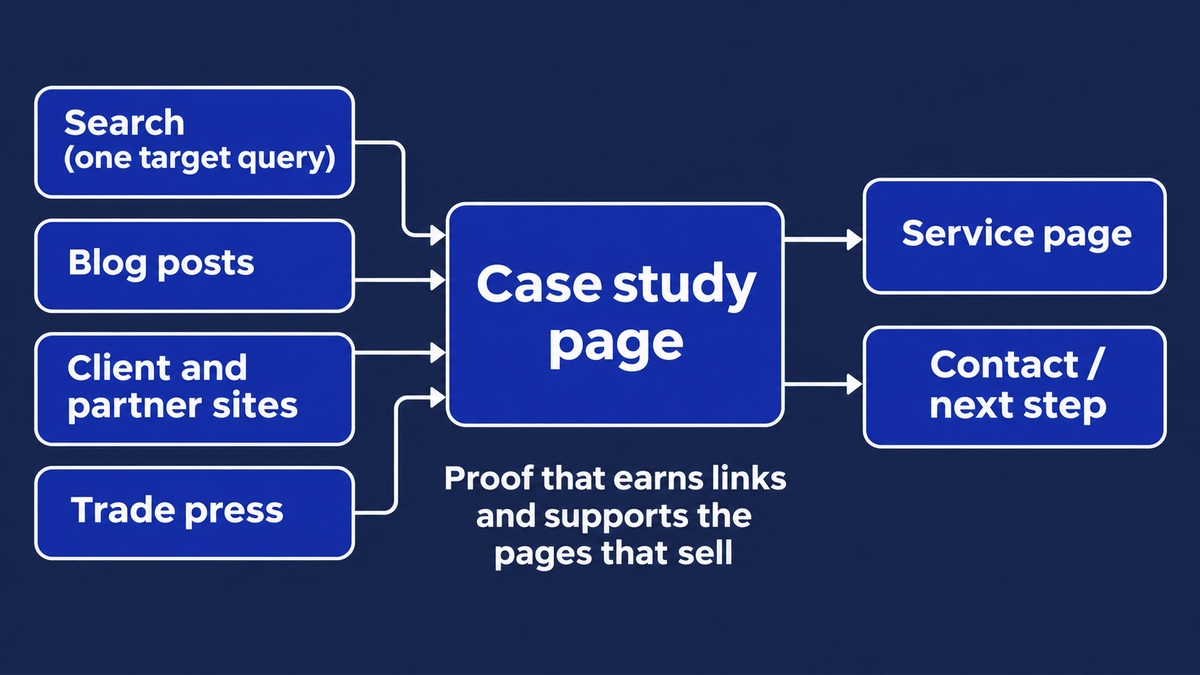
These stories work best when they are concrete: the problem, what changed and what the numbers were, with the client’s approval. For how to build the case study itself, see making case studies rank and earn links. The pitfall is vague praise. “Great team, would recommend” gives an editor nothing to publish.
6. Link reclamation for unlinked brand mentions
Reclamation means finding places that already mention your brand, your people or your research without linking, and asking for a link. It is usually the fastest win, because the writer already knows who you are.
- Set up brand and product name alerts, or search for them by hand.
- Check each mention and see whether it links.
- Send a short, friendly note thanking them and asking if they could link to the source.
- Also check for links that point to old or broken URLs on your own site, and redirect those to the right URLs.
The pitfall is tone. A demand for a link comes across as entitled. Treat it as a favour to their readers.
7. Fix broken links on industry resource pages
Many industry sites keep resource lists of useful products, guides and standards, and many of those lists contain dead links. You find a dead link, check that you have a page that genuinely replaces it and let the site owner know. They fix a problem, you earn a link.
Broken link building only works when your content really fits. If you stretch to make it match, editors notice. Do not send mass emails with a pasted template either. Choose a short list of resource hubs in your niche and do it carefully.
8. Close the backlink gap with competitors
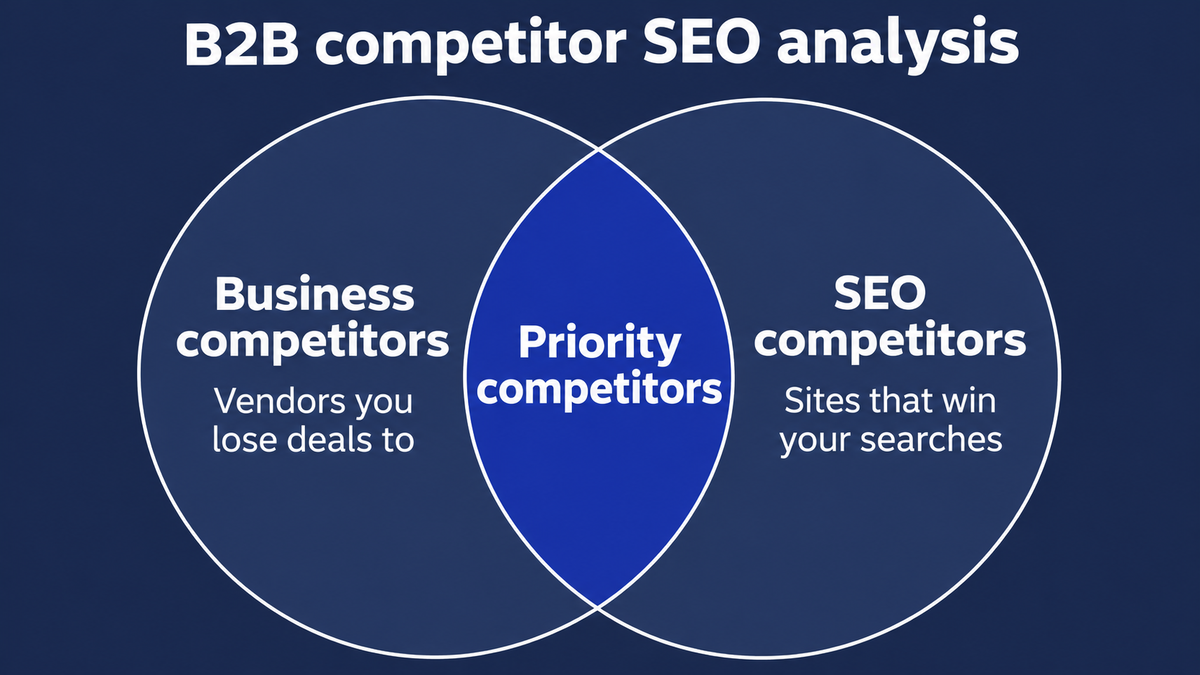
A competitor gap is the list of sites that link to two or more of your competitors but not to you. Those sites already care about your topic and have shown they link to firms like yours, so they make better prospects than cold lists. Ahrefs and Semrush can both produce this comparison.
Review the list by hand and sort it by how you might earn each link: a directory you can join, a roundup you could appear in, a publication you could contribute to. We cover the method in a B2B competitor SEO analysis. The pitfall is chasing every domain on the list. Some sites are there because competitors paid for the link.
9. Earn spots on roundups and “best of” lists
Roundups and “best software for X” lists are common in B2B. They include vendor comparisons, resource roundups and review sites, such as G2 and Capterra for software. A spot on a list gives you a link and puts you in front of buyers who are actively comparing options.
Find the lists that rank for your category and your buyers’ questions, then work out what the editor needs: accurate details, a good screenshot, a clear description. Be honest about where you fit. These lists also matter for AI answers, which we cover below. The pitfall is paying for placement without a clear label, which brings you into Google’s rules on paid placements.
10. Use social media, podcasts and communities to get seen
Links from social platforms and communities are usually nofollow or ugc, so they do little for rankings directly. The value is distribution. When you use social media well, appear on niche podcasts and webinars or take part in forums and Slack communities, the writers and publishers in your industry notice you.
Those writers are the ones who link later. Share the research you published, answer questions in forums without dropping URLs everywhere, and say yes to podcast invitations from shows your buyers listen to. The pitfall is expecting a direct link payoff. Think of it as the groundwork for strategies 1 to 9.
How to choose the right strategies for your business
Start with the assets and relationships you already have, then add one strategy that builds a new asset. A company with strong customer relationships should begin with partner listings and customer stories. A company with deep expertise but no data should start with research or expert commentary.
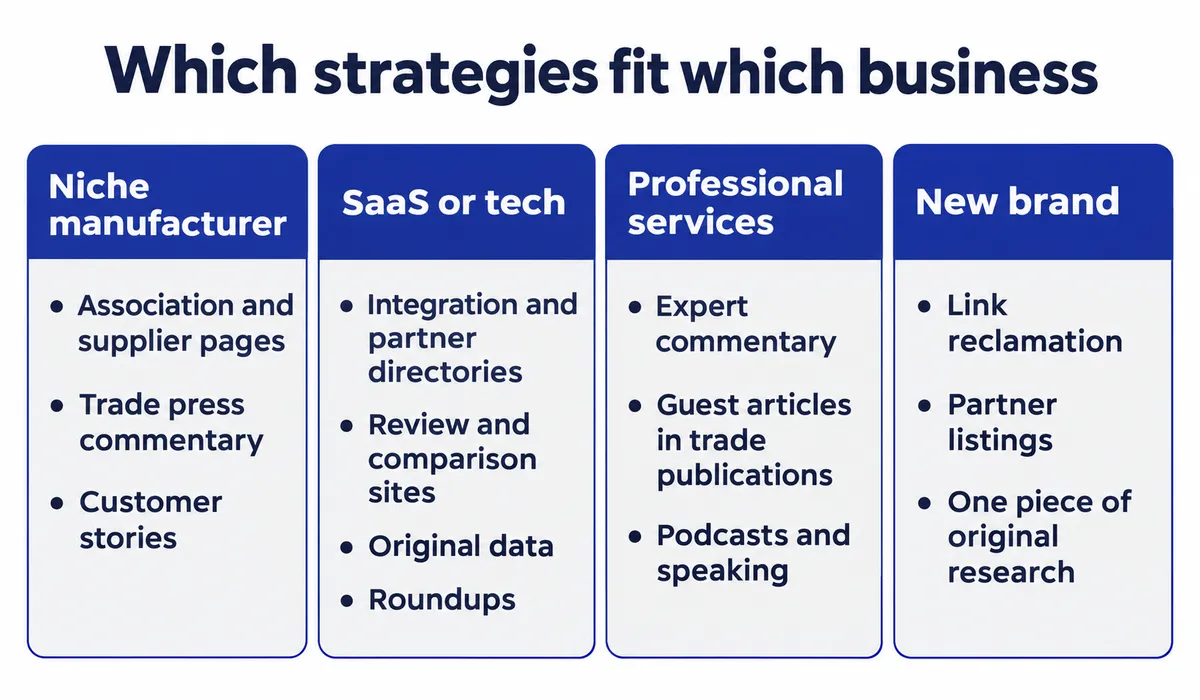
Here is how the techniques used most often line up with different B2B situations:
- Niche manufacturer or industrial firm: trade association and supplier or distributor listings, expert commentary in trade press, and customer stories.
- SaaS or tech company: integration and partner directories, review and comparison sites, original data and roundups.
- Professional services firm: expert commentary, guest articles in trade publications, podcasts and speaking.
- New brand with little to point to: link reclamation, partner listings and one solid piece of original research.
You do not need all ten. Most B2B firms run two or three approaches well and get better results than a team spreading effort across ten. Your building strategy should fit the team you have: if nobody has time to write, do not pick guest posts.
How to run outreach that editors answer
Outreach is the step where most link building plans fall apart, because most emails are generic. An editor with a full inbox answers the ones that are short, specific and useful to their readers.
- Pick the URL you want linked. Choose one that is worth linking to and describe it in one line.
- Make a short list of relevant sites. Ten well-chosen sites beat 200 scraped addresses.
- Find the right person. Look for the editor or writer who covers the topic, not a generic contact address.
- Send a short, specific email. Say what you published, why it fits their content and what is in it for their readers. Write in a personalized way, with a detail that proves you read their site.
- Follow up once. A single polite follow-up a few days later is enough.
A simple example:
Hi Sam, I read your piece on warehouse automation costs last week. We just published a benchmark of 200 mid-size facilities showing where the costs actually land after year one. It might be a useful reference for the section on payback periods. Happy to send the underlying data if that helps. Thanks, Alex
A tool for managing lists and follow-ups helps, but the email itself still has to read like a person wrote it. The goal is to reach the right editors, not send the most messages.
How backlinks and mentions affect AI answers
Links and mentions now matter beyond Google. G2’s April 2026 research found that “half of B2B software buyers (51%) now start their research with an AI chatbot more often than with Google”, and that citations from a software review site were buyers’ top trust signal (G2’s research). That survey covered software buyers, so treat it as a signal for that segment, not for all B2B.
AI answers pull from third-party sources: lists, reviews and trade articles. Those are the same places that give you links, so one piece of work can earn both. An unlinked mention can still help your visibility in AI answers, which is one more reason to chase relevant placements and not only dofollow ones.
For more on this, see how ChatGPT chooses which businesses to recommend and our overview of generative engine optimization. The short version: the work that earns respected links also builds the third-party reputation that AI systems look for.
What Google treats as link spam
Google defines link spam as “the practice of creating links to or from a site primarily for the purpose of manipulating search rankings” (Google spam policies). The examples most relevant to B2B teams are:
- Buying or selling links that pass ranking credit, including exchanging money, services or free products for a link.
- Excessive link exchanges and partner pages created only for cross-linking.
- Links with optimized anchor text in articles, guest posts or press releases distributed on other sites.
- Low-quality directory or bookmark links.
- Automated link programs.
Paid placements are not banned. They are fine when you qualify them. Google’s guidance says to use rel=“sponsored” for “advertisements or paid placements”, rel=“ugc” for user-generated content such as comments and forum posts, and rel=“nofollow” when the other values do not apply (Google on qualifying outbound links).
One more point on quality over volume. Google’s Gary Illyes reportedly said in April 2024 that Google needs “very few links to rank pages” (Search Engine Roundtable). It was a second-hand report, so do not build a plan on it, but it fits the advice above: a few relevant links from trusted sites, earned honestly.
Tools for finding and tracking backlinks
You can run a good program with a short list. Match each one to a job:
- Link data and backlink gap: Ahrefs or Semrush for finding which sites link to you and your rivals.
- Your own link data: Google Search Console, which is free and shows the sites linking to you.
- Brand mention alerts: a monitoring service or saved searches to catch new unlinked mentions.
- Outreach software: for managing lists, sending and tracking follow-ups.
- A spreadsheet or CRM: to track who you contacted, what you offered and what happened.
Start with Search Console and a spreadsheet. Add paid options when you know which questions they need to answer.
How to measure results in B2B
Measure link building by what it does for your buyers’ journey, not by the raw count. Useful measures:
- New backlinks from relevant sites.
- Rankings and traffic for the product and offer URLs you meant to help, not just the linkable asset.
- Assisted conversions and “how did you hear about us” answers in your CRM.
- Mentions in AI answers for your category prompts.
Expect a lag. Authority compounds over months, and I would not promise a fixed timeline to anyone. For a full approach to reporting, see SEO reporting for B2B, and for the AI side, tracking AI visibility.
Doing it in-house or hiring outside help
In-house work suits teams with subject experts, spare time and existing relationships. Outside help makes sense when your marketing team does not have the time or the digital PR skills. What agencies charge usually depends on the sources they target, the content they create and how many sites they approach.
Watch for red flags when you buy this kind of work: a guaranteed number of links at a fixed price per domain rating, no say over which sites you will appear on and any mention of private networks. Good providers explain where the placements will come from and let you approve the sites.
If you want a second opinion on your plan, talk to us about your link profile and we will look at where your best opportunities are. You can also read more about our SEO services.
Frequently Asked Questions
How long does link building take to show results for a B2B site?
There is no fixed timeline. It depends on how competitive the topic is and how strong the site already is. New links have to be found and crawled, and rankings usually move over months, not weeks. Judge early progress by the relevant sites that now link to you and by your rankings on the target topics.
Is it OK to pay for backlinks?
Paying for links that pass ranking credit breaks Google's spam policies. Paid placements and sponsorships are fine when the link carries rel="sponsored" or rel="nofollow". Paying for outreach work, research or design is not the same as paying for a link.
How many backlinks does a B2B website need?
There is no target number. A few links from sites your buyers read usually do more than many from unrelated sites. Compare your profile with the sites that rank for your topics to set a realistic aim.
Do backlinks still matter now that buyers use AI search?
Yes. Links still help Google find and rank content, and AI answers draw on third-party sources such as reviews, lists and trade articles. The same placements that earn links also earn mentions that AI tools can pick up.
What are the main types of backlinks?
The main types are editorial links, contributed content (guest posts), partner and directory listings, mentions you convert through reclamation, and paid or sponsored links that should be marked as such. For B2B, editorial and partner links from industry sites usually carry the most weight with buyers.

Written by
Adriaan van Swieten
Adriaan leads Stijg Media and works directly on search, AI visibility, websites, and local growth strategy.
Meet Adriaan