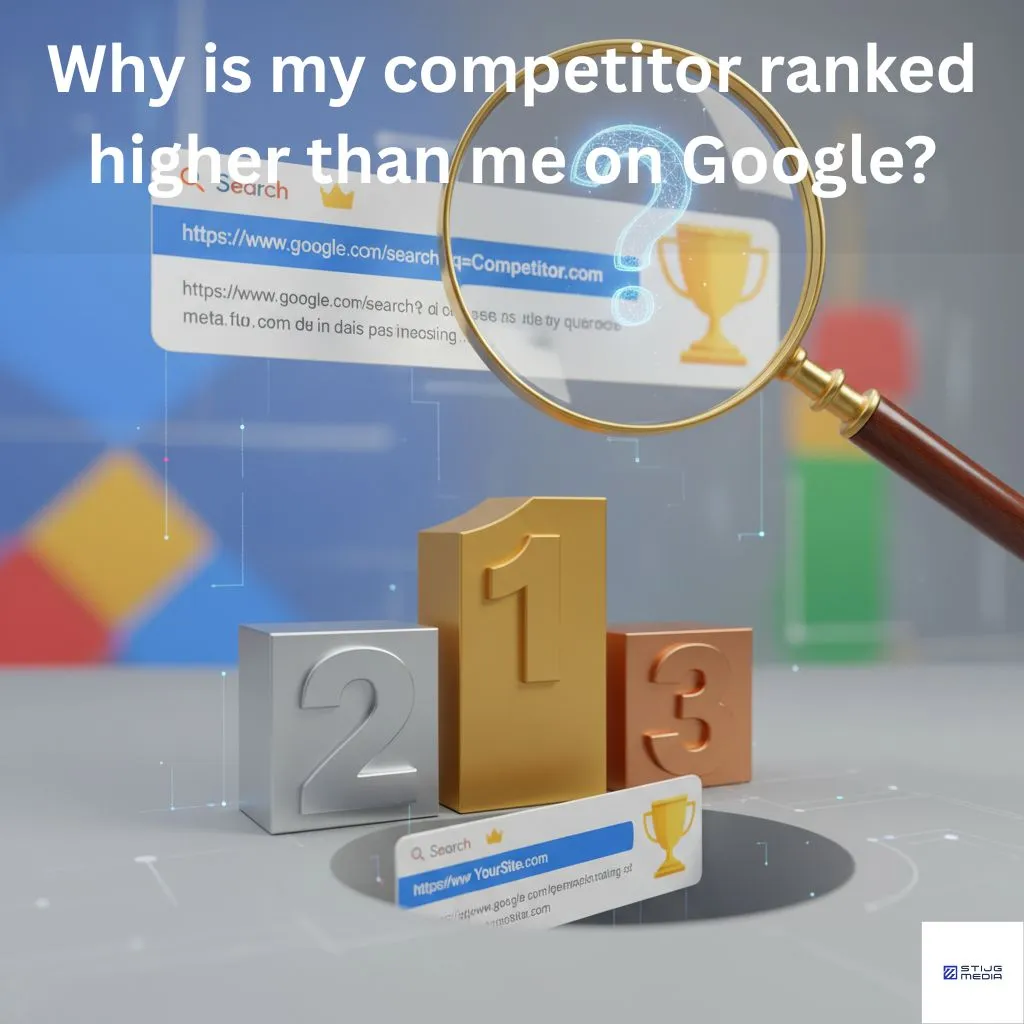
Why is my competitor ranked higher than me on Google? (It’s not the reason you think in 2025)
Your competitor is likely ranked higher because Google’s AI views them as the more authoritative and trustworthy answer in your niche, a problem that goes beyond simple keyword targeting. Outranking them in 2025 requires a fundamental shift from chasing blue links to building a digital profile that AI consistently recommends as the definitive solution.
The ‘Ranking Chase’ is a Losing Game in the Age of AI
For years, the goal of SEO was simple: get to the #1 spot on the page of ten blue links. It was a tangible, measurable target. You used tools for monitoring competitor rankings, performed a backlink gap analysis, and celebrated when your dot jumped above your rival’s. But a persistent focus on that goal today is like perfecting the art of horseback riding after the invention of the automobile. The landscape has fundamentally and irrevocably changed.

We are now firmly in the era of AI-driven search. Instead of just presenting a list of possible answers (the links), AI tools like ChatGPT and Gemini deliver a synthesized, conversational answer from multiple sources. Google’s own search results are dominated by AI Overviews that summarize information from multiple sources, pushing the traditional organic results further down the page. Winning the top organic spot is becoming a pyrrhic victory. Why? Because the real battle is for inclusion in that synthesized answer.
Consider the user’s behavior. The AI gives them a direct answer. They have less incentive to scroll and click. In fact, sobering data confirms this shift; a recent Pew Research Center report found that when Google shows an AI summary, users are almost half as likely to click on any link. If your entire digital marketing strategy is geared toward earning a click that is becoming statistically less likely, you are investing in a depreciating asset. The nagging question, “why am I losing to my competitor in search results,” can no longer be answered by simply looking at rankings.
From Keywords to Consensus: How Google’s AI Crowns an Industry Leader
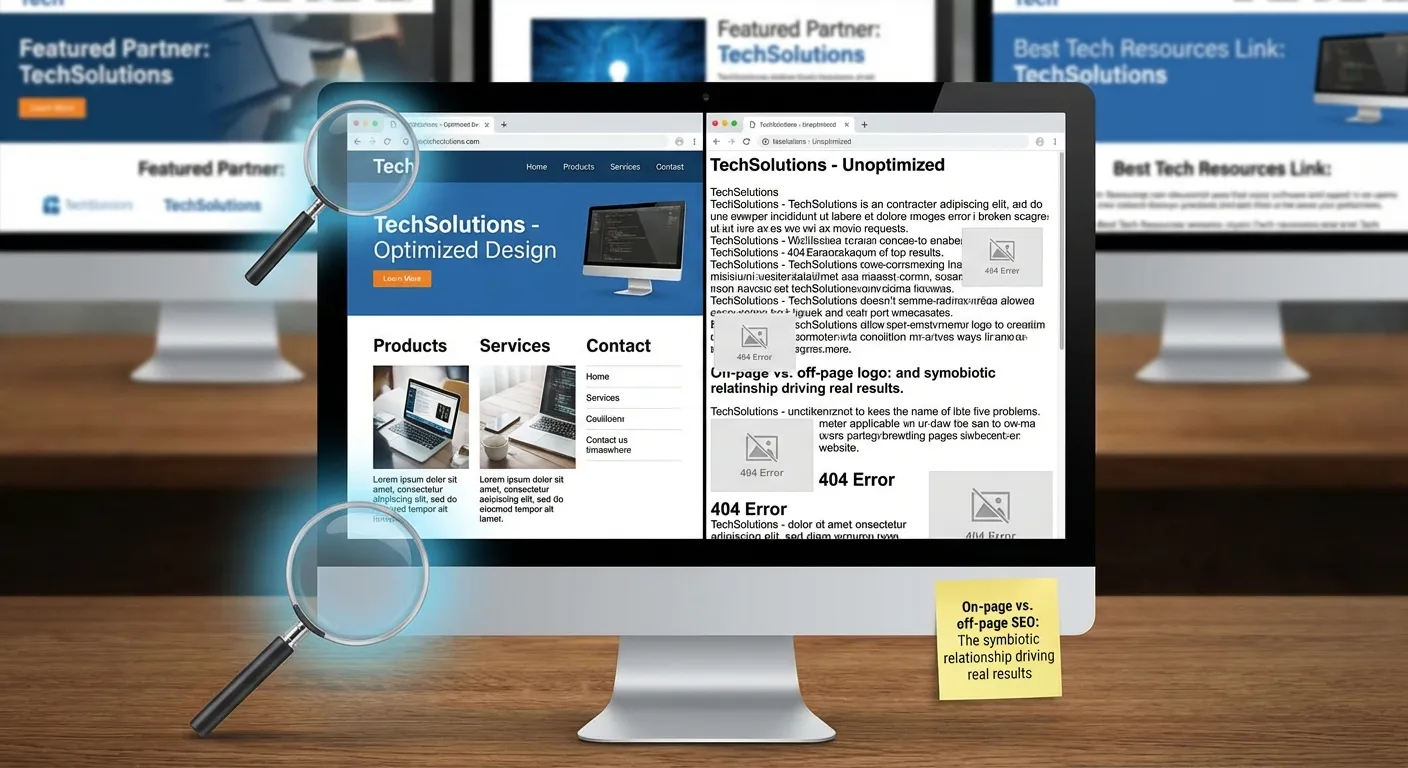
To understand what to do when a competitor outranks you, you must first understand how search engine algorithms rank pages in this new environment. The old model was heavily reliant on on-page factors (using the right keywords) and off-page factors (having quality backlinks). The new model is about digital consensus.
Think of Google’s AI as a hyper-intelligent researcher tasked with finding the most credible expert on a topic. It doesn’t just read your website. It scours the entire web—press mentions, industry publications, podcasts, forum discussions, academic papers, and online reviews—to form a holistic picture. It’s asking, “Who does everyone else agree is the authority here?” This is the essence of E-E-A-T. As stated in Google’s guidelines, your website needs to demonstrate experience, authority and expertise in your niche to achieve the top spots in search results. It’s not just a suggestion; it’s the core of the evaluation process.
This is why you might see a competitor ranking with thinner content or wonder why do some sites rank with few backlinks. Their on-page signals might seem weaker, but their off-site authority—the digital consensus—is overwhelming. With AI, credibility and repetition across diverse sources are what move the needle, whereas in traditional SEO, keywords were king. This is why improving E-E-A-T to beat competition is no longer a niche tactic but the central strategy. Google uses EEAT (experience, expertise, authoritativeness and trustworthiness) to determine whether search engine results display relevant information, and that evaluation extends far beyond your own domain.
A Nuanced Comparison: Traditional SEO vs. AI-Driven Authority
Understanding this shift requires a clear-eyed look at the two primary approaches to search visibility. They aren’t mutually exclusive, but your primary focus determines your long-term viability.
Traditional SEO (The Keyword Ranking Chase)
This approach focuses on identifying valuable keywords and optimizing specific pages to rank for them. It involves technical SEO audits of competitor sites, on-page SEO comparisons, and a relentless pursuit of backlinks.
- Pros: It offers clear, trackable metrics (keyword rankings, domain authority). It can produce relatively quick results for long-tail keywords with low competition and is effective for capturing users with high commercial intent at the bottom of the funnel.
- Cons: It’s a reactive and defensive game. Progress can be wiped out overnight by a core algorithm update. It creates a dependence on a shrinking piece of SERP real estate (the classic blue links) and often leads to an unwinnable “content arms race” where you’re constantly trying to create slightly better content than your competitors.
AI-Driven Authority (Becoming the Answer)
This approach focuses on making your brand the most credible, cited, and recognized entity in its niche across the entire web. The goal is to train AI models that you are the default, correct answer.
- Pros: This strategy is future-proof and resilient to algorithm updates because it aligns with Google’s core mission. It builds a durable competitive moat that is difficult and expensive for competitors to replicate. It leads to sustainable, long-term visibility and builds genuine brand trust, generating predictable business results as you become the go-to source.
- Cons: Results take longer to materialize. The ROI is harder to measure with traditional SEO tools (you can’t easily track “brand consensus”). It requires a more integrated marketing approach that fuses SEO, PR, and content marketing, demanding a higher level of strategic commitment.
The New Competitor Analysis: Your ‘AI Authority Audit’
So, how do you figure out where you stand? The old methods of analyzing competitor website traffic or using a content gap analysis tool are no longer sufficient. You need to stop asking “what are my competitors doing for SEO?” and start asking “why does AI trust my competitor more than me?” It’s time to conduct an AI Authority Audit.
This is a practical method to reverse engineer competitor’s SEO strategy for the modern era. Instead of just using traditional SEO competitor analysis tools, you will directly query the AI models you’re trying to influence. Open up ChatGPT (4.0), Google’s Gemini, or Perplexity and follow these steps:
- The “Who is the Leader?” Prompt: Ask a neutral, high-level question about your industry. For example: “Who are the most authoritative and well-respected residential roofing companies nationally?” or “Which ecommerce brand is considered the expert in sustainable pet food?” Pay close attention to who it names first and most frequently.
- The “Why?” Prompt: Now, dig deeper. Follow up with: “Based on the public data you have access to, why did you choose [Competitor Name] as an authority? What specific sources, mentions, or signals indicate their expertise?” The AI will often list the exact articles, reviews, and data points it used to form its opinion. This is your roadmap.
- The “What Do I Lack?” Prompt: Finally, perform a direct comparison: “Compare the digital authority profile of [Competitor Name] with [My Company Name]. What are the primary gaps in expertise, authority, or trustworthiness for [My Company Name]?” The AI will give you an unbiased, data-driven list of your weaknesses.
Performing this audit is often a humbling experience. It moves beyond metrics like ‘competitor has more referring domains’ and reveals the true nature of your authority gap. One of our clients, a B2B software firm, used this exact process and discovered their primary competitor was consistently cited in academic research papers—a signal they had completely ignored. After adjusting their strategy to focus on thought leadership and university partnerships, a company representative noted, “I’ve seen an uptick in website traffic and calls since.” They weren’t just building links; they were building credibility where it mattered.
From Tactics to Strategy: The SEO-PR Fusion
Armed with the insights from your AI Authority Audit, you can now build a strategy to close the gap. This isn’t about learning “how to steal your competitor’s backlinks.” It’s about earning your own, more powerful authority signals through a fusion of SEO and public relations.
Step 1: Conduct a Deep Topical Authority Analysis
Go beyond a simple backlink gap analysis. Look at the topics your competitor owns. Is their content better than mine? is a good starting question, but it’s deeper than that. Are they publishing original research? Do they have expert authors with real credentials? This is how you start improving topical authority over competitors. Your goal is to create “10x content”—material so good it becomes the definitive resource on the subject, which is essential for outranking a bigger brand on Google.
Step 2: Build a Digital ‘Echo Chamber’ of Credibility
Your name needs to be everywhere your customers and AI look for trusted information. This means moving beyond tactical link building to strategic outreach. Get your experts quoted in industry publications, appear as guests on relevant podcasts, publish bylined articles on respected news sites, and speak at virtual or live events. Each mention, even unlinked ones, builds the consensus that you are the authority. This is how you get the kind of high-quality backlinks that truly matter.
Step 3: Reinforce Authority with On-Site Excellence
Your website must be a fortress of trustworthiness. This is where technical SEO still plays a crucial role. A poor user experience undermines all your off-site efforts. Conduct a Core Web Vitals competitor comparison and a site speed comparison for SEO. Ensure your site’s mobile-friendliness vs competitor is superior. A logical internal linking strategy vs competitor can also demonstrate the depth of your expertise on a topic. Finally, using schema markup for competitive advantage is critical—it helps search engines understand your content’s context, making it easier for them to feature you as a rich result or in an AI overview.
Step 4: Weaponize Your Social Proof
If your competitor has better online reviews, you have a critical problem. AI models and users see reviews as a direct measure of trustworthiness. You need a systematic process for generating, monitoring, and showcasing customer reviews and user-generated content. This builds a powerful trust signal that is incredibly difficult for competitors to overcome. One of our long-term clients in a highly competitive service industry directly attributes their market leadership to this fusion strategy. “We went from page 8 to page 1 in six months and have stayed there ever since,” they shared. Their success wasn’t from a short-term trick; it was from systematically becoming the most trusted name in their field.
Answering Your Lingering Questions
Why am I not ranking higher on Google?
You are likely not ranking higher because Google’s AI-driven systems do not yet perceive your brand as the most authoritative, experienced, and trustworthy entity in your specific niche. While technical factors and keywords still play a role, your overall digital reputation and the consensus of third-party sources about your expertise are now the dominant factors determining your visibility.
How do you outrank your competition in Google ads?
Outranking competitors in Google Ads is a separate discipline from organic SEO. It operates on an auction system based on your bid and your Quality Score. Quality Score is influenced by ad relevance, landing page experience, and expected click-through rate (CTR). Interestingly, building strong brand authority organically can have a positive halo effect on your ads, as users are more likely to recognize and click on ads from a brand they already trust, which can improve your CTR and Quality Score over time.
Is 75 a good SEO score?
An “SEO score” of 75 from a third-party tool like Moz, Ahrefs, or SEMrush is a directional indicator, not a definitive grade. These scores are proprietary metrics that attempt to quantify your site’s authority, primarily based on its backlink profile. A “good” score is one that is higher than your key organic search competitors and is consistently improving. However, it’s a vanity metric. You should focus on business outcomes like traffic, leads, and sales, not an arbitrary score that has no direct correlation with Google’s internal ranking algorithms.
Making the Right Choice for Your Needs
The path forward isn’t about abandoning old tactics entirely but about rebalancing your strategy for the future of search. The right blend of traditional SEO and AI-driven authority building depends on your business model and market position.
For Local Service Business Owners
If you’re struggling with inconsistent lead flow, a hybrid approach is essential. You must win on the local front first. Address questions like “why does my competitor show up in the map pack and I don’t?” by mastering the fundamentals: optimizing your Google Business Profile, building a consistent local citation profile, and driving a steady stream of positive reviews. This provides immediate, tangible results. Simultaneously, begin your authority-building journey. Get featured in local news, partner with other respected local businesses, and become the go-to expert for the local media. This builds a long-term defensive moat that makes you the obvious choice in your service area.
For National Ecommerce Brand Managers
If you’re facing stalled traffic and shrinking profit margins from rising ad costs, a decisive pivot to AI-driven authority is your best long-term strategy. Competing on individual product keywords against retail giants is an expensive, losing battle. Instead, focus on becoming the definitive authority for your entire category. Invest heavily in creating best-in-class guides, original research, and video content that helps customers make better decisions. Pursue product reviews and placements in high-authority publications. This digital PR effort builds a brand that customers and AI seek out directly, reducing your reliance on costly, bottom-funnel advertising and creating a more sustainable growth model.
Ultimately, the most effective strategy is one that’s tailored to your unique goals, resources, and competitive landscape. The core question is no longer just “how to outrank my competitor on Google,” but “how to become the undisputed authority that Google’s AI has no choice but to recommend.” Answering that requires a deeper level of analysis and a more sophisticated, forward-thinking approach.
For a comprehensive ‘AI Authority Audit’ that analyzes your brand’s digital consensus against your top competitors, and to receive a clear roadmap to dominate your market in 2025 and beyond, connect with the strategists at Stijg Media. Our team, based in Norwood, MA, specializes in building future-proof digital marketing strategies that deliver predictable, long-term results. Contact us today to secure your position as the leader in your industry.