For small businesses in 2026, Search Engine Optimization (SEO) has transcended its role as a simple marketing tactic for online visibility. It is now a foundational business strategy essential for defining brand authority, building appreciating digital assets, and converting raw market intent into a sustainable competitive advantage against larger rivals.
The Strategic Shift: From Visibility Tactic to Business Intelligence Engine
For years, many small business owners viewed SEO as a dark art—a technical checklist of keywords and backlinks aimed at one simple goal: ranking number one on Google. This was a limited, tactical perspective. Today, that view is not just outdated; it’s dangerous. In an economy increasingly shaped by AI-driven search and sophisticated consumer behavior, clinging to this old model means leaving your most valuable data and growth opportunities on the table. A modern digital marketing strategy recognizes that a brand can be considered old fashioned if it does not utilise the SEO as their marketing strategy according to recent studies in the field.
The reality is that SEO is no longer just about being found. It’s about being chosen. It’s the framework through which you understand your customers, build brand credibility, and create a defensible position in the market. Shockingly, over 60% of small businesses don’t invest in SEO, and a significant portion have no plans to implement one. This isn’t just a missed opportunity; it’s a strategic vulnerability that forward-thinking competitors are already exploiting.
The core thesis of this article is that for a small business to thrive, SEO must evolve from a line item in the marketing budget to a central pillar of the entire business operation. It’s how you define your brand, build your digital moat, and turn the search engine itself into your unpaid R&D department.
Beyond Visibility: The New Battleground for Brand Authority
In the past, ranking on the first page of the search engine results pages (SERPs) was the end goal. Now, it’s merely the price of entry. The real battle is for brand positioning and topical authority. When a potential customer searches for a solution, they are not just looking for a link; they are looking for an answer from a credible source. Google, Bing, and other search engines have become exponentially better at identifying and rewarding genuine expertise.
This is where the concept of E-E-A-T (Experience, Expertise, Authoritativeness, and Trustworthiness) becomes paramount. This isn’t just a set of abstract ranking factors; it’s Google’s framework for mirroring human trust. For a small business, this is a massive opportunity.
You can build E-E-A-T by consistently publishing high-quality, helpful content that demonstrates your real-world experience. This includes detailed blog posts, in-depth service pages, case studies, and guides that answer the specific, nuanced questions your target audience is asking. Think of your website not as a digital brochure, but as a living library of your company’s expertise.
Every piece of quality content you publish strengthens your digital footprint and builds brand awareness. When the right audience sees a website at the top of their search results, that business’ credibility skyrockets as it signals endorsement from the search engine. You are no longer just a provider of services; you are the authority in your niche. This authority is what turns a one-time visitor into a long-term customer.
From Keywords to Conversations
Traditional SEO was obsessed with individual keywords. Modern SEO, or what we might call Answer Engine Optimization (AEO), is focused on owning entire customer conversations. It’s about understanding the full customer journey, from the initial awareness-stage query to the final purchase decision.
This requires deep keyword research not just for high-volume terms, but for the long-tail keywords and questions that reveal true search intent. When you create content that addresses these specific needs, you attract highly qualified visitors to your site. This targeted approach improves user engagement signals like click-through rate (CTR) and time on page, which in turn tells Google that your website is a valuable resource deserving of higher rankings.
This virtuous cycle builds a foundation of organic traffic that is far more stable and valuable than a temporary spike from a paid ad.
Your Unpaid R&D Department: Using Search Intent as Market Intelligence
One of the most profound and underutilized aspects of a sophisticated SEO strategy is its function as a real-time market research tool. Every day, millions of your potential customers are telling search engines exactly what they want, what their problems are, and what solutions they’re looking for. This data is a goldmine, and tools like Google Search Console and Google Analytics are the shovels.
By analyzing the queries that bring visitors to your website, you gain direct insight into market demand. Are people searching for a specific feature you don’t offer? Are they asking questions that your current services don’t fully address? This is not just content marketing fuel; it’s direct feedback that can and should guide your product and service development. It helps you refine your buyer persona and ensure your business outcomes are aligned with actual market needs.
For instance, a local plumbing business might notice a surge in searches for “tankless water heater installation cost.” This isn’t just a keyword to target with a blog post. It’s a signal that there is growing demand and price sensitivity around this specific service. This intelligence can inform pricing strategies, promotional offers, and even inventory decisions. You can use this insight to create the most comprehensive resource on the web for that topic, thereby capturing that high-intent traffic and generating qualified leads.
Building a ‘Digital Moat’: Why Organic Presence Is a Long-Term, Appreciating Asset
Let’s contrast two common digital marketing approaches: paid advertising (like Google Ads) and organic SEO. It’s not that one is “good” and the other “bad,” but they serve fundamentally different strategic purposes.
Paid Advertising (The Rented Land)
Paid ads are like renting a billboard on a busy highway. They offer immediate visibility and can generate website traffic and leads very quickly. They are excellent for testing offers, promoting time-sensitive events, or supplementing organic traffic. However, the moment you stop paying, your visibility disappears. The traffic stops. The leads dry up. You are perpetually paying rent for your position, and your marketing budget is directly tied to your results. There is little to no appreciating asset being built.
Traditional SEO (The Unstable Foundation)
An older approach to SEO focused purely on technical tricks and keyword density to achieve high rankings. While it could sometimes produce results, it was often short-lived. A single Google algorithm update could wipe out rankings overnight because the foundation was built on manipulating the system rather than providing genuine value to the user. It lacked a focus on brand and user experience (UX).
Modern SEO / AEO (The Owned Fortress)
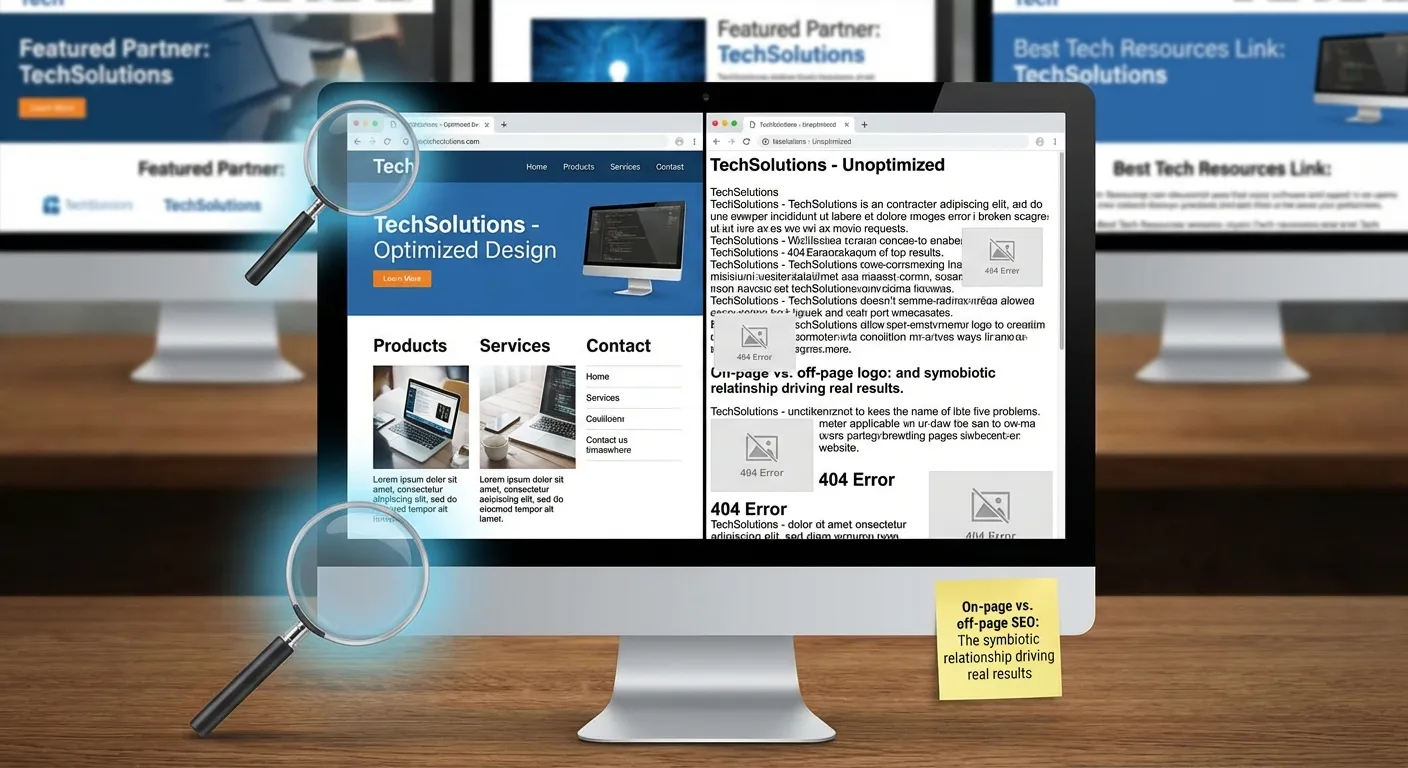
A modern, content-driven SEO strategy is like buying land and building a fortress. It takes more time, effort, and upfront investment. You have to conduct a thorough SEO audit, perform competitor analysis, build quality backlinks, and optimize everything from your technical SEO (like Core Web Vitals and page speed) to your on-page SEO (like title tags, meta descriptions, and internal linking).
However, every piece of evergreen content you create is a brick in your fortress. Every authoritative link is a reinforcement. Over time, you build a powerful, defensible digital asset that generates organic traffic consistently. This asset appreciates in value, continuously producing a return on investment (ROI) long after the initial work is done. It becomes the bedrock of your inbound marketing efforts, attracting customers to you naturally.
One of our clients, a service-based business, experienced this firsthand. They were struggling to be found online and were completely dependent on unpredictable referral work. As their consultant noted, “We went from page 8 to page 1 in six months and have stayed there ever since. Adriaan and his team have done amazing work providing steady guidance to help drive business growth.” This is the power of building a digital asset; it provides sustainable, long-term growth and predictable lead generation, transforming a business from reactive to proactive.
The Great Equalizer: How SEO Lets Small Businesses Outmaneuver Giants
Large corporations often have massive marketing budgets, but they also tend to be slow, bureaucratic, and generic in their messaging. A small business, on the other hand, possesses agility and deep niche expertise. SEO is the mechanism that allows you to weaponize these advantages.
A large national chain cannot possibly create content that speaks as authentically to the needs of a specific local community as a dedicated local business can. This is where a focused local SEO strategy becomes a powerful competitive advantage. By optimizing your Google Business Profile, gathering positive customer reviews, building local citations with consistent NAP (Name, Address, Phone Number), and creating content around “near me” searches, you can dominate the “Local Pack” or “Map Pack” results for your service area. This can drive both sales growth and physical foot traffic.
Furthermore, a small business can identify and target specific, high-intent, long-tail keywords that larger competitors deem too small to pursue. By creating the definitive piece of content on that narrow topic, you can own that customer conversation entirely. Cumulatively, winning hundreds of these small niche battles allows a small business to carve out a significant share of organic traffic, effectively outmaneuvering their larger, slower rivals. After all, organic searches drive most website traffic, making this one of the most powerful strategies available.
Navigating Your Growth Strategy: Key Factors for Choosing Your Path
Deciding how to allocate your resources requires a clear understanding of your goals. Digital marketing supports the effort to build brand recognition, which in turn provides a competitive edge. Here are the key factors to consider when weighing your options.
Desire for long-term, sustainable growth vs. short-term traffic spikes. If your primary goal is to build an asset that generates leads and revenue for years to come, a modern SEO strategy is non-negotiable. It creates a cumulative effect where your authority and traffic grow over time. Paid ads are better suited for immediate, campaign-specific needs where the long-term asset value is not the primary concern.
Need for predictable revenue and lead generation. While paid ads can seem predictable (money in, clicks out), their cost-per-acquisition can be volatile and tends to rise over time. A mature SEO presence, on the other hand, delivers a consistent flow of highly qualified organic traffic. This creates a more stable and predictable lead generation engine that is not directly tied to your daily ad spend, making business forecasting more reliable.
Concern about being left behind by technological changes (e.g., AI search). The rise of AI-powered search (like Google’s SGE) rewards quality, authority, and content that directly answers user questions. A “modern SEO” approach, focused on E-E-A-T and building topical authority, is inherently future-proof. Strategies based on gaming the algorithm or relying solely on paid placements are far more vulnerable to being disrupted by these technological shifts.
Goal of building brand authority and trust, not just website clicks. Users inherently trust organic results more than paid ads. Achieving top organic rankings for important industry terms positions your brand as a leader. This trust is invaluable. It shortens the sales cycle, improves conversion rates through effective conversion rate optimization (CRO), and builds a loyal customer base that sees you as a partner, not just a vendor.
Making the Right Choice for Your Needs
There is no single “best” strategy; the optimal path depends entirely on your specific business model, goals, and market position. Here is how different types of business owners should approach this decision.
For the Local Service Business Owner seeking a consistently full schedule and predictable revenue
Your focus should be a hyper-local SEO strategy. This means perfecting your Google Business Profile, aggressively seeking online reviews on platforms like Google and Yelp, and building out service pages and blog posts that target geotagged keywords (e.g., “emergency plumbing services in [city]”). Your goal is to own the local map pack for your most profitable services.
A testimonial from one of our local clients highlights the direct impact: “I’ve seen an uptick in website traffic and calls since.” This direct response is the lifeblood of a service business. You can use paid ads (like Google Local Services Ads) to supplement during slow periods, but your core investment should be in building an untouchable local organic presence.
For the Ecommerce Brand Manager struggling with rising customer acquisition costs and stalling traffic
You are likely caught in the treadmill of rising paid ad costs. Your salvation lies in a robust content marketing and technical SEO strategy. You need to move beyond just product pages. Create comprehensive buying guides, comparison articles, and “how-to” content related to your products. This captures customers at every stage of the buyer journey, not just when they are ready to purchase. Optimizing for long-tail keywords can drive highly qualified traffic that converts at a higher rate.
A deep dive into technical SEO to improve page speed and Core Web Vitals is also critical for providing a seamless user experience, especially with mobile-first indexing being the standard.
For the Growth-Minded Entrepreneur who feels their current marketing is a ‘gamble’ and wants a clear, future-proof strategy
You need to stop thinking in terms of isolated campaigns and start thinking in terms of building a strategic, defensible asset. Your approach should be a holistic digital marketing strategy with modern SEO at its core. You need to invest in building topical authority in your niche. This means a commitment to creating best-in-class content, performing rigorous competitor analysis, and pursuing high-quality backlinks that signal your authority to search engines.
This is not a short-term play; it’s a long-term investment in your brand’s future value and credibility. It’s the move from gambling on ads to methodically building an engine for sustainable sales growth.
Ultimately, the right digital strategy is about moving from renting your audience’s attention to owning a direct relationship with them. While paid advertising can open the door, a comprehensive SEO strategy builds the house. It’s the most reliable path to creating a business that doesn’t just survive but thrives on its own authority, generating predictable growth for years to come.
For businesses ready to stop gambling on temporary traffic and start building a permanent digital asset, the expert team at Stijg Media in Norwood, MA, can provide a clear roadmap. Contact us to understand how a forward-thinking SEO strategy can become your most powerful engine for growth.